
Who's behind the news?
Who's behind the news?

Over a quarter of all scrapped federal data came from the Education Department, Newsjunkie analysis reveals
You wouldn’t happen to be interested in how US children are faring in the worldwide reading crisis, would you? Or in long-term studies of post-COVID high schoolers as they test their education in the real world? How about data that shapes policies addressing mass shootings on school campuses?
Because the federal government is not interested.
At least ten Education Department data collections have been suspended or terminated since Trump’s second term began, the largest reduction in statistical products to hit any of the federal agencies, according to a Newsjunkie analysis of dataindex.us’s Federal Data Terminations Tracker. This is our first finding from the Disappearing Data Topology, a collaborative initiative between Newsjunkie and the National Security Archive, which intends to map the holes being bored into our public information systems.
While coverage of dataindex’s findings has placed health data as the most impacted sector of public information, a report by Disappearing Data Topology lead data specialist, Christian Nielsen-Garcia, argues that the distinction actually belongs to education. 158 collections relating to health have been affected by data cuts, compared to 24 collections from the Education Department. But 97% of those health datasets were altered (a couple fields per entry removed or changed); only four are completely missing from the public record. That’s less than half the number of terminated education sets. Collections from the Education Department account for 26% of deleted government data. Health comes to 10.5%.
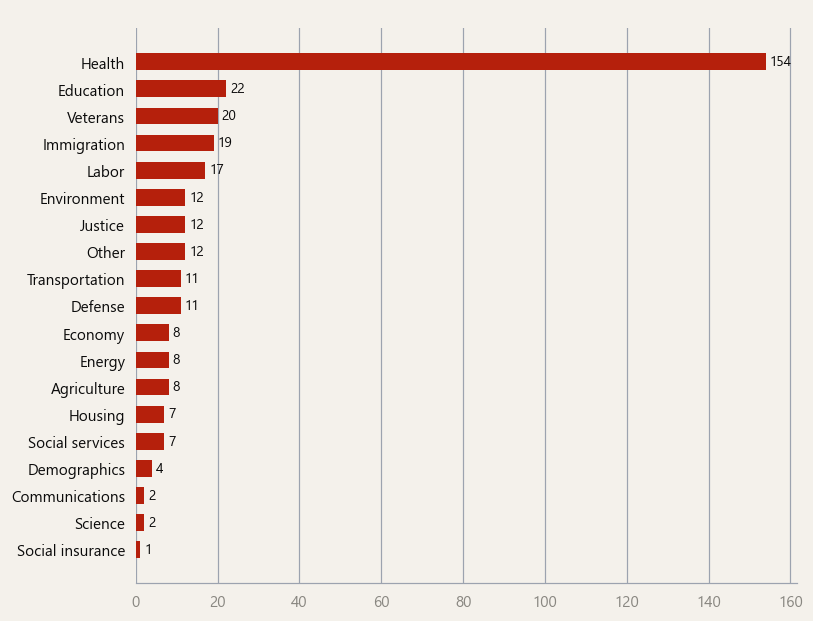
Figure 1b. from True Impact of Data Removals by Policy Domain by Christian Nielsen-Garcia shows that measuring for alterations, which often means the removal of a single element, inflates perceived damage to health data.
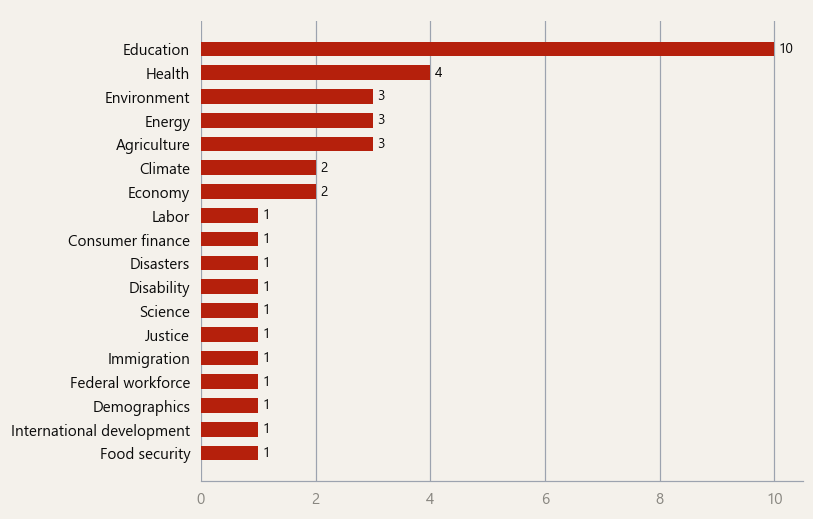
Figure 1a. demonstrates the impact of terminations on education data.
The missing education datasets include the monthly School Pulse Panel Survey (collection halted in July 2025) and the 2023 National Teacher and Principal Survey (completed but not released). These collections acted as a window into the conditions of US public schools and the experiences of the people spending the most time with the nation’s children. Neither survey ran for longer than a decade, but in that short time, they became widely-cited resources for studying COVID impacts, teacher turnover, and school-based mental health services, to name a few subjects. Plugging their titles into Google Scholar turns up 3,447 academic texts in total.
The Education Department also stopped submitting data to two global literacy assessments, one for fourth graders and one for adults. When the US participated in the fourth-grade assessment in 2016, we showed less growth compared to other countries and increasing disparity between our worst and best readers, which our own National Assessment of Educational Progress (NAEP) doesn’t test for, according to EdWeek. On the last adult assessment in 2023, Americans scored significantly lower in literacy and numeracy compared to previous years.
Dataindex also lists the Indicators of School Crime and Safety collection as terminated, with the website for the joint Education and Justice project leading to a 404 error. This compendium of education and crime statistics was meant “for policymakers and practitioners so that they can develop effective programs and policies aimed at violence and school crime prevention,” according to the 2023 release, which reported the second-highest number of school shooting casualties since 2000.
Also terminated is the High School and Beyond Longitudinal Study. This started in 2022 with a national cohort of ninth graders, and was meant to follow them after graduation to measure how their high school diplomas, received in the aftermath of a global pandemic, served them in the real world. The first follow-up was scheduled for the spring of 2026, but the entire study was dead by the spring of 2025.
I don’t want to make it sound like the Trump administration altering 154 public health datasets is not a big deal. It is.
The overwhelming majority of these changes came out of Executive Order 14168, which took a bold stance against biological reality by asserting that all of humanity falls rigidly into the “female” and “male” sex categories, and demanded that references to “gender identity” be scrubbed from all government communications. As a result, a total of 367 collections and records were altered, according to UCLA’s Williams Institute. Of the 337 altered datasets tracked by dataindex, 249 were attributed to SOGI (sexual orientation and gender identity) measure changes.
When it comes to health data, EO 14168 effectively blocks a targeted minority group, transgender and gender-nonconforming people, from representation and services. Collections related to domestic violence, youth homelessness, HIV, and suicide all had SOGI elements removed, despite these issues’ disproportionate impact on transgender and other LGBTQ Americans. Instead of health data in general, a more accurate headline based on dataindex’s work might report that LGBTQ health data has been the most impacted out of any information category.
The change for health data in general is much less drastic. Nielsen-Garcia’s analysis shows that 93% of altered datasets maintained continuity, meaning that the core collection process hadn’t changed for the vast majority, including the health sets. These reduced products won’t provide information on people who exist outside of Trump’s gender ideology, but they will still provide broad pictures of public health.
As for the broad picture of our education system: According to the American Statistical Association, only 22 out of 74 data products from the Education Department’s statistical agency are currently “Active,” including products that have been altered or reduced. Another 22 have been “Completed,” and the rest (40%), are MIA.
That’s why it’s more helpful to look at terminated collections to measure impact to public knowledge. The Department of Health and Human Services may be a battered vessel, pressed into the world’s most careless navy, but it’s still strong enough to sail. The Education Department, on the other hand, is an inmate on death-row.
Our goal for the Disappearing Data Topology (DDT) is to create a tool that can fuel investigative reporting. We hope to build on projects like the Federal Data Terminations Tracker and Gov Info Tracker to triangulate exactly what has gone missing, how the government is communicating (or covering up) changes, and how much information civil preservationists have managed to save. DDT is for reporters everywhere, plus anyone else who’s interested in what the Trump regime is doing to education, health, climate science, food safety, civil rights, and our public information.
We’ll be keeping you updated on our findings and the development of our interactive DDT tool. And in the meantime, here’s a bit of good news.
Hope for environmental science. As promised in my last newsletter, I’ve continued my deep dive into bridge institutions and found even more examples of innovative research programs hosted by museums, zoos, and botanic gardens. There’s the Frozen Zoo at the San Diego Zoo Safari Park, for example, which made it possible to create a black-footed ferret clone named Antonia. And there’s a community science program hosted by a museum in San Francisco that uses crowdsourced data to keep an eye on endangered sea star species.
I was also reminded that professional science is relatively new—batteries, typewriters, and sewing machines are all older than the word “scientist”—and that major advancement heavily relied on amateur contributions in its early days. In California, it turns out that the history of environmental science, bridge institutions, amateur botany, and the state government are more intertwined than you would think.
You can learn about that surprising history, and the promising future of environmental science at bridge institutions in this Prairie Fire article.
And don’t worry, I haven’t forgotten about libraries and historical societies. Next on my list is the oral history programs that are protecting the stories of vulnerable minority groups targeted by the Trump administration. All of them hosted or facilitated by bridge institutions.
Seeking education stories. Now that our Disappearing Data Topology put us on the trail of education data, the real reporting begins. That’s where you come in. If you have any stake in the terminated Education Department collections, if you are a teacher or a principal concerned with literacy rates or school safety, if you are a survivor of COVID-era high school, if you are working on a research initiative to fill in the data gaps—whatever your connection with this loss of info, please reach out.
That’s right, I’m the data dealer this time. You can reach me by replying to this email, sending a message to morgan@newsjunkie.net, or to my Signal account (mohk.12).
The government isn’t interested in your stories. But we are.
So please, educate us!
Until next time, data-dealers.
—Morgan
The report "True impact of data removals by policy domain," by Christian Nielsen Garcia, is licensed under a Creative Commons Attribution-NonCommercial 4.0 International License CC BY-NC 4.0.
© 2026 Newsjunkie.net
Virtual
dataindex.us is a collaborative effort dedicated to monitoring changes in federal datasets. Its team is building tools to track a broad range of changes in federal datasets to build actionable insights for policymakers, advocates, journalists, and data users.
Washington, DC
A nonprofit research institute and archive at George Washington University, the National Security Archive preserves and publishes declassified U.S. government documents on national security, foreign policy, and intelligence, and advocates globally for open government.
Alexandria, Virginia