
Who's behind the news?
Who's behind the news?
New York
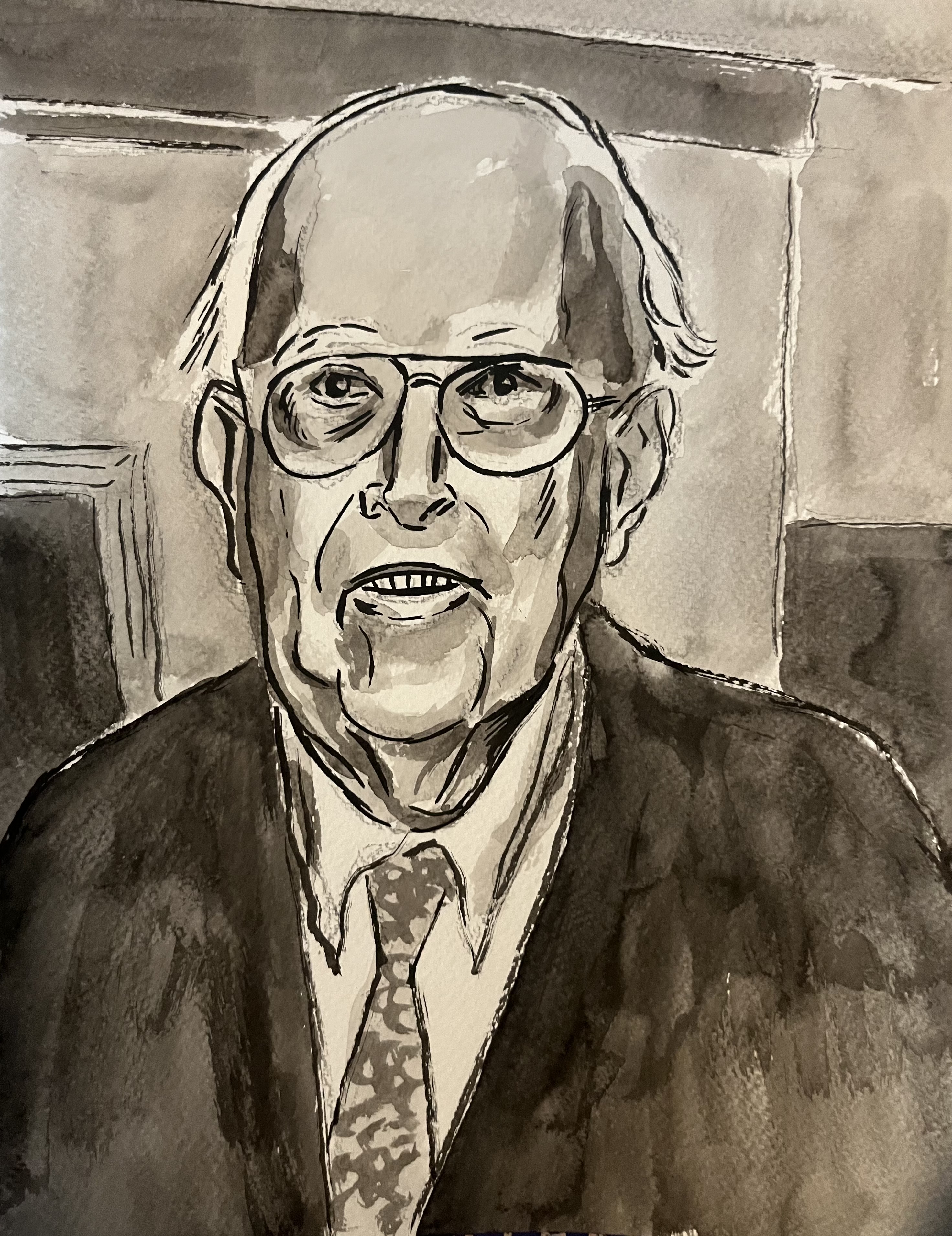
Richard Neill Winfield was born on January 20, 1933 in Chicago. He grew up in Valley Stream, Long Island, New York, and graduated with a bachelor's degree from Villanova University in 1955. He edited the Villanovan campus newspaper and considered a journalism career but was persuaded by one of the Augustinian priests at Villanova to enroll in law school instead. He enrolled at Georgetown University where he earned his J.D. in 1961.
He served in the U.S. Navy for four years and taught modern European history and American diplomatic history at the U.S. Naval Academy. Later he taught media law classes at the Brooklyn Law School and at the Columbia and Fordham law schools in Manhattan.
As chief lawyer for the Associated Press for three decades, and as counsel for other media organizations, Mr. Winfield mastered a legal strategy to protect reporters’ confidential sources and unpublished notes. He challenged efforts to close court proceedings to the press, persuaded judges to allow cameras in courtrooms, and worked to insulate newspapers from libel suits.
Louis D. Boccardi, the former president and chief executive of Associated Press, said about Mr. Winfield, “He understood the newsroom and appreciated the dedication and the care that had gone into the work,” He continued, “I often thought that if the law hadn’t called him for a career, he would have made a wonderful reporter.”
"Freedom of expression is the matrix, the indispensable condition, of nearly every other form of freedom,” are words written by Justice Benjamin Cardozo in a 1937 Supreme Court decision. Mr. Winfield borrowed the phrase for the title of the 2012 book he edited, “Exporting the Matrix: The Campaign to Reform Media Laws Abroad.” The book gathers articles about freedom of expression cases, many borne from the Arab Spring uprisings, written by the lawyers, judges, academics and advocates involved.
Winfield’s volunteer activities to promote freedom of expression took him around the world. He led media reform programs in several former Soviet bloc nations, trained lawyers and judges from Albania to Zimbabwe about free speech and served as a court observer in overseas media defamation cases.
One of the many global cases he tried was advocating for a Palestinian humanitarian. A report by the United Nations Educational, Scientific and Cultural Organization in 2021 cited the project’s intervention on behalf of Issa Amro, described as a Palestinian human rights defender who was tried for “disturbing public order, hate speech, and insult” before an Israeli military court and a magistrate’s court in the West Bank city of Hebron.
“Providing in-depth legal arguments drawn from international human rights law,” the UNESCO report said, the intervention gave the campaign for Mr. Amro’s release “legitimacy and argued that the proceedings were politically motivated.”
In 2000, Mr. Winfield helped found the International Senior Lawyers Project, which organizes volunteer lawyers to promote free expression, court reform and accountability, and protects journalists against government suppression and judicial constraints.