
Who's behind the news?
Who's behind the news?
Philadelphia, Pennsylvania
The Environmental Collaboratory (TEC) is a joint interdisciplinary initiative of Drexel University and the Academy of Natural Sciences of Drexel University — the oldest natural science research institution in the Americas, founded in 1812 and merged with Drexel in 2011.
Stronger Regulations, Safer Communities
The Coalition to Prevent Chemical Disasters is a multi-organization national alliance of health, labor, environmental justice, public health, and public interest organizations united around a single federal regulatory demand: that the Environmental Protection Agency implement and enforce strong chemical safety rules that prevent chemical disasters before they occur.
Science, Economics, and Law for the Planet
The Environmental Defense Fund is one of the world's most influential environmental organizations — founded in 1967 from the audacious act of ten scientists and an attorney incorporating in a borrowed conference room at Brookhaven National Laboratory, with no members, no staff, no office, and no bylaws, to pursue what was at the time a novel legal strategy: taking environmental protection to court.
Independent initiative to publish the canceled National Nature Assessment
National Security, Law, and Policy
Lawfare is an American nonprofit multimedia publication dedicated to the intersection of national security, law, and policy — the space where the executive branch's powers to protect the country encounter the legal and constitutional limits on those powers, and where technology, geopolitics, and democratic governance intersect in ways that require both legal precision and policy intelligence to understand.
Public Records for the Public Good
MuckRock is a non-profit collaborative news site public records platform founded in 2010 by Michael Morisy and Mitchell Kotler — two Cornell University graduates who looked at the Freedom of Information Act and saw not just a transparency mechanism but a broken process.
But these data dealers will
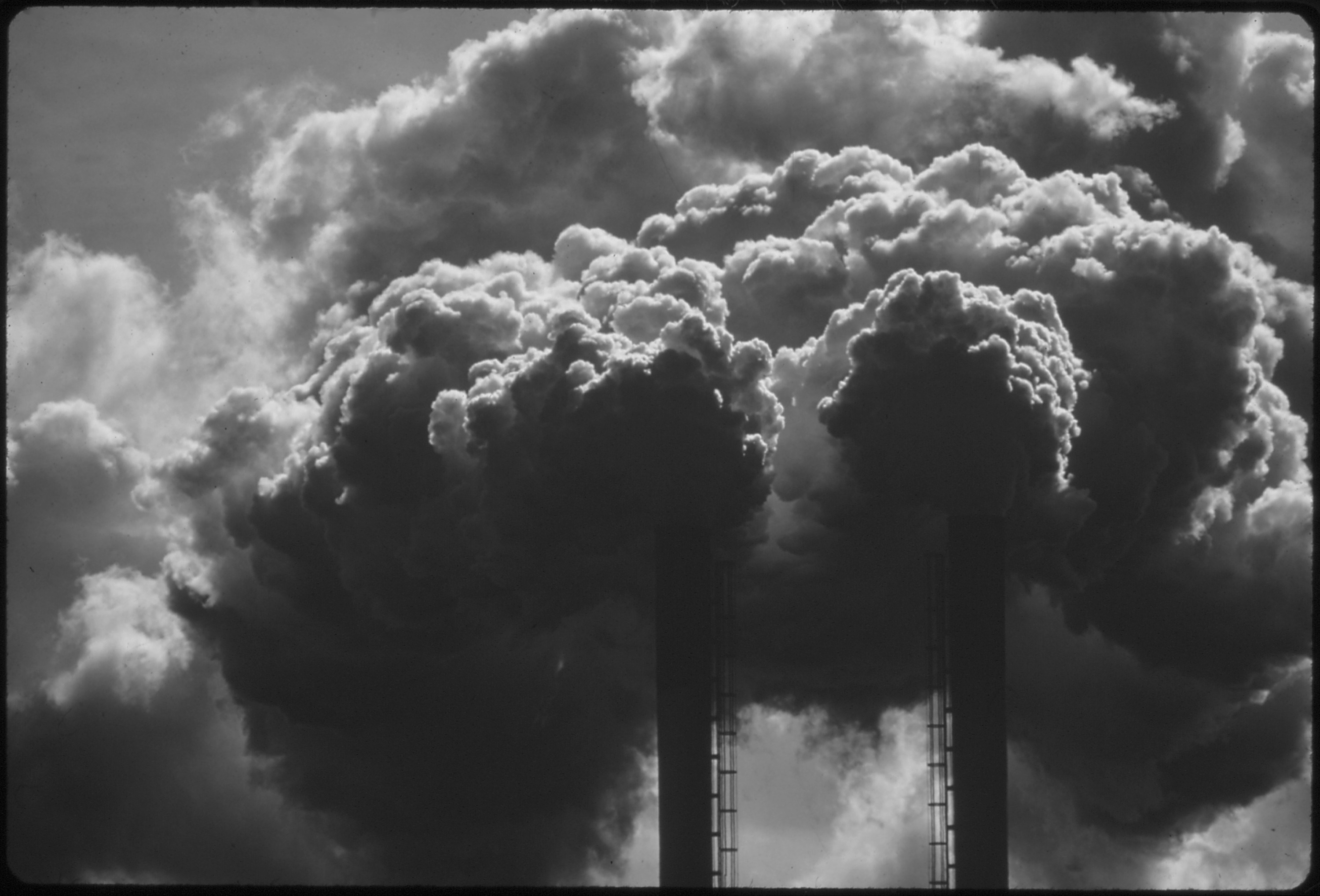
The chemical industry didn’t waste any time after Lee Zeldin—2020 election conspiracist, and suspected beneficiary of illegal campaign funds from Big Pollution—was confirmed as head of the Environmental Protection Agency on January 29th, 2025. The very next day, an alliance of chemical industry lobby groups wrote to congratulate Zeldin on his new job and then complain about the Biden administration’s protections against chemical disasters. The lobbyists claimed that the new safety requirements were “onerous” and, “Absent swift and targeted action by EPA, our members will be forced to spend millions of dollars…” :(
Doesn’t that just break your heart? No? Oh right, because US chemical facility accidents cause $477 million in damages annually, including human injury and death, while US chemical industries generate $673 billion annually.
Well, Zeldin’s heart must have been broken by that heavy burden on his friends' wallets. Because two months later, in March 2025, the EPA announced that it would “reconsider” the Biden boost to the Risk Management Program (RMP). And it quietly removed its RMP data tool, which allowed users to enter their addresses into a map to see if they lived near any of the 11,000+ facilities handling large quantities of hazardous chemicals—another request from the lobbyist letter.
Then, in February 2026, the EPA announced its RMP rollback proposal, which would grant the rest of Big Chemical’s wishlist. If approved, expanded safety measures in areas such as, “safer technology and alternatives analyses, [public] information availability, third-party audits, employee participation, community and emergency responder notification…,” will be nixed. Zeldin’s EPA is calling this the “Common Sense Approach to Chemical Accident Prevention,” because of course chemical manufacturers will do everything they can to prevent accidents—cleanup and repairs are costly, not to mention replacing dead or injured employees. Think of how it affects the bottom line! Chemical plants are doing just fine without the government's help, hitting an average of one chemical disaster every 2.5 days all on their own.
The industry-friendly rollbacks haven’t been finalized yet, and facilities are obligated to implement the Biden safeguards by the 2027 deadline. But let me ask you something: If you were a chemical manufacturer, getting clear signals that the administration sees things your way, how would you spend your year? Would you rush to comply with the Biden-era orders?
Or would you start cutting corners.
Last month, the West Coast experienced two chemical emergencies. One, in Longview, WA, killed 11 employees when a tank holding 500,000 gallons of corrosive white liquor imploded. And the other, in Garden Grove, CA, required roughly 50,000 residents to evacuate their homes. Round-the-clock efforts from the county fire department, plus an incredibly lucky break, managed to prevent a tank of methyl methacrylate from exploding and dousing a dense suburban neighborhood with 7,000 gallons of toxic vapor. Prior to the emergencies, neither of these tanks were considered dangerous enough to qualify for the EPA’s Risk Management program. However, both facilities (the Nippon Dynawave Packaging plant and GKN Aerospace, respectively) had records of local safety violations, as well as incidents involving the same chemicals that caused their May emergencies.
So much for common sense.
As the Trump regime proceeds to defang the EPA, including a push to neuter the inspection board currently investigating the Longview implosion, experts warn that chemical disasters will likely become even more frequent. As per their strategy of blocking the public from information, and therefore participating in oversight, the administration is gatekeeping the location and threat-levels posed by chemical facilities. They don’t want you to know if you, or your loved ones, live next to a ticking time bomb. Ignorant or dead, either way they don't complain.
But, thanks to the work of coalitions, independent science organizations, and data preservationists, you can still access the RMP database and map tool. Here are the organizations that are refusing to let the regime generate a black-hole cover for the chemical weapons in our backyards.
created by the Drexel University Environmental Collaboratory & the Environmental Justice Health Alliance for Chemical Policy Reform
RMP data was preserved and made publicly accessible by the Data Liberation Project, a MuckRock and Big Local News collaboration
created and maintained by the Coalition to Prevent Chemical Disasters
layers all media-reported chemical disasters since 2021 with the RMP data, allows users to compare the EPA’s current threat threshold with the location of real incidents
the Coalition to Prevent Chemical Disasters hosts other resources such as:
press releases on Zeldin’s weakening of EPA protections and the Garden Grove and Longview chemical disasters
Reports & Factsheets, including a timeline of 2026 EPA rollbacks
the Coalition’s history page also acts as a history of the RMP
created by the Union of Concerned Scientists
goes beyond the RMP to map facilities the Trump admin deemed to be exempt from the Clean Air Act
created by the Environmental Defense Fund
On May 14th, I attended a talk by an organization of ex-federal environmental scientists, held at the San Diego Natural History Museum. I thought I was in for a dry, if informative, lecture on how the Nature Record transformed their canceled White House project—a nationwide assessment of our natural resources and ecosystems—into an independent report. But the evening took a few unexpected turns. I hadn’t anticipated being asked to write a poem, for one thing. And certainly not a poem based on the tree hugger’s version of the Pledge of Allegiance.
It was all part of the Nature Record’s strategy for solving one problem facing orphaned government projects: reach. Ripped out their natural habitat, the scientists would no longer have access to the government channels that deliver its reports into the hands of local leaders and conservationists. Instead, they took their Nature Assessment on the road, and started pioneering new methods of outreach.
You can read about the Nature Record’s strategies, and what it was like to see them in action, here.
Also in May, The Department of Justice deleted news releases covering the prosecution of rioters in the January 6, 2021 Capitol attack. This record removal is the “latest step by the Trump administration to dramatically rewrite the history of the assault on the US Capitol,” according to The Guardian.
But Lawfare has stepped in to preserve the DOJ records. The nonprofit, national security-focused outlet is building an archive of removed and endangered documents related to Jan. 6, which already hosts “the vast bulk of what was deleted.”
See also: NPR’s Jan. 6 visual archive and database.
While the Trump regime is intent on selling out the public to any destructive industry that will pay, we will not be completely abandoned. The heroes who have dedicated their lives to holding polluting and exploitative industries to account have not stopped—they’re continuing to protect our knowledge, our rights, and our safety.
It’s up to us to support them, and to carry on their work in whatever form we can.
Until next time, data dealers.
—Morgan
Conflicts of Interest in the Environmental Protection Agency
These Companies Avoided Clean-Air Rules. It Took a Single Email.
More than 40 Trump administration picks tied directly to oil, gas and coal, analysis shows
See Which 2020 Election Deniers and Skeptics Won and Lost in the Midterm Elections (Published 2022)
Hazardous Chemical Disasters Strike as Trump EPA Rolls Back Federal Safety Regulations
EPA, "Common Sense" is Protecting Communities and Workers from Chemical Disasters
© 2026 Newsjunkie.net