
Who's behind the news?
Who's behind the news?
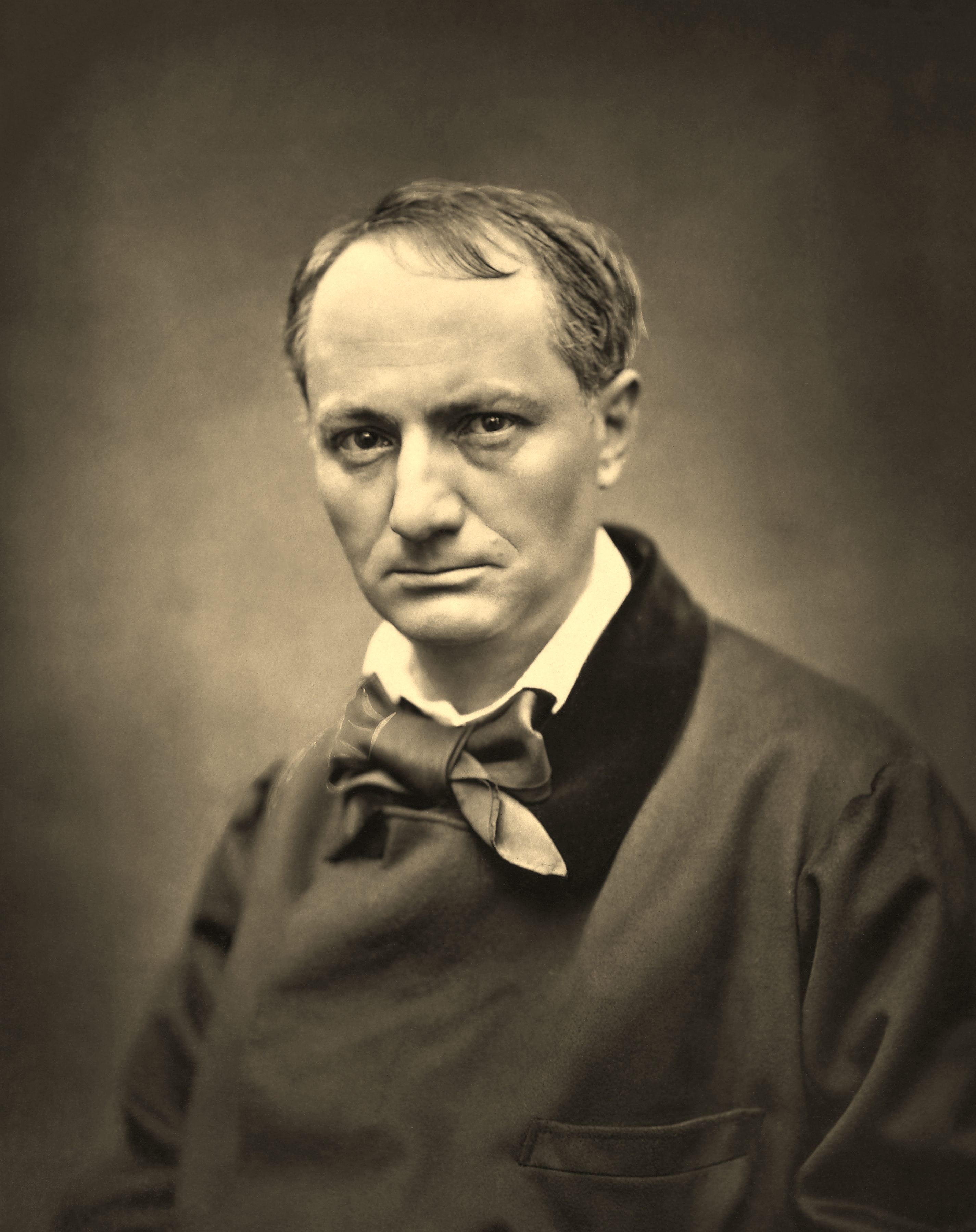
Baudelaire finds emotional truth in an invented life. A journalist must open the window and discover the real story.
Windows” by Charles Baudelaire, translated by Arthur Symons
He who looks in through an open window never sees so many things as he who looks at a shut window. There is nothing more profound, more mysterious, more fertile, more gloomy, or more dazzling, than a window lighted by a candle. What we can see in the sunlight is always less interesting than what goes on behind the panes of a window. In that dark or luminous hollow, life lives, life dreams, life suffers.
Across the waves of roofs, I can see a woman of middle age, wrinkled, poor, who is always leaning over something, and who never goes out. Out of her face, out of her dress, out of her attitude, out of nothing almost, I have made up the woman's story, and sometimes I say it over to myself with tears.
If it had been a poor old man, I could have made up his just as easily.
And I go to bed, proud of having lived and suffered in others.
Perhaps you will say to me: "Are you sure that it is the real story?" What does it matter, what does any reality outside of myself matter, if it has helped me to live, to feel that I am, and what I am?
* * *
Charles Baudelaire (1821–1867) is widely regarded as a foundational figure in modern poetry and an important precursor of literary modernism. His work helped move poetry away from the elevated subjects and conventions of Romanticism and toward the crowded streets, private rooms, alienated lives and moral ambiguities of the modern city.
Baudelaire was also instrumental in developing the prose poem, a form that uses the rhythms, imagery and compression of poetry without traditional meter or line breaks. “Windows,” included in his posthumously published collection Paris Spleen, is a particularly striking example. In a few paragraphs, Baudelaire turns the sight of a stranger through a window into an invented life story—and then asks whether the story’s factual accuracy matters.
He was a great admirer of Edgar Allan Poe and translated much of Poe’s work into French. Baudelaire recognized in Poe a shared fascination with beauty, terror, perversity and the grotesque. Those concerns also shaped Baudelaire’s best-known collection, The Flowers of Evil, which scandalized many readers when it appeared in 1857. Baudelaire, his publisher and his printer were prosecuted for offending public morals, and six poems were ordered suppressed. An expanded edition appeared in 1861 without the prohibited poems, which remained officially banned in France for decades.
Although The Flowers of Evil acquired a reputation for decadence and sexual transgression, it is now considered a landmark in the development of modern poetry. Baudelaire wrote about erotic desire, death, corruption, boredom, intoxication, the supernatural and the uneasy experience of modern urban life. He found poetry not only in conventional beauty but also in decay, isolation and the lives of people usually overlooked.
He was equally fascinated and repelled by the newspaper. In one frequently translated passage, Baudelaire complained that any edition of a newspaper offered a catalogue of human cruelty: wars, crimes, thefts, torture and political wrongdoing served to civilized readers with their morning meal. His objection was not simply that newspapers reported horror. It was that the daily presentation of atrocity could turn suffering into routine consumption.
That criticism makes “Windows” an especially provocative choice for a column about journalism. The poem begins with an act familiar to every reporter: looking closely at another person’s life from the outside. From a distant window, Baudelaire observes a middle-aged woman bending over her work. He knows almost nothing about her, yet from her face, clothing and gestures he constructs an entire story. Through imagination, he enters her suffering and briefly escapes the limits of his own life.
A journalist may recognize both the value and the danger of this impulse. Reporting requires the ability to see that a stranger has an interior life—to understand that a gesture, a room or a passing expression may point toward a larger story. Without curiosity and imaginative sympathy, observation remains superficial.
But Baudelaire goes where a journalist cannot. When challenged to prove that his story is the real one, he dismisses the question. What matters to him is that the imagined life has helped him feel more fully alive. For the poet, emotional truth can justify invention. For the journalist, reality outside the observer matters. A compelling interpretation cannot replace verification, and empathy cannot excuse putting invented thoughts, motives or experiences into another person’s life.
“Windows” therefore captures a central tension in journalism. Reporters must look through the pane and imagine that a fuller life exists beyond what is immediately visible. Then they must open the window, ask questions and discover where imagination ends and the real story begins.
Poem originally published in Poems in Prose from Charles Baudelaire (London: Elkin Mathews, 1913). This translation is in the public domain in the United States.
Column © 2026 Newsjunkie.net