
Who's behind the news?
Who's behind the news?
1 of 6
The pioneering cartoonist discusses how he found his way into journalism, why comics offer something unique, and what keeps pulling him back to the hardest stories.
Joe Sacco is one of the central figures in comics journalism, a form he helped bring into the contemporary mainstream. Through books like Palestine, Safe Area Goražde, and Footnotes in Gaza, he fuses his training as a journalist with his talent as a cartoonist. Sacco has spent decades reporting on war, occupation, and political violence through drawings that are at once intimate, immersive, and rigorously reported. His work has proved that comics can be serious journalism. Newsjunkie managing editor, Peter Landau, spoke with Sacco about his route from aspiring newspaper reporter to groundbreaking cartoonist, the appeal of alternative forms to younger audiences, and his return to Gaza in a forthcoming collaboration with journalist Chris Hedges.
Hello, this is Peter Landau, managing editor for Newsjunkie.net, and with me today is Joe Sacco, who needs no introduction, but I’m going to ask him for one anyway.
I’m a cartoonist, probably most known for my journalism work, but I call myself a cartoonist because I don’t want to be restricted to just journalism.
You followed a traditional path to journalism and ended up working in a unique corner of it.
I wanted to be a hard news writer. I wanted to write for a newspaper. And that just didn’t pan out. So I fell back on what I’d been doing since I was a kid, which is drawing. I mean, it’s kind of a process. It took a few years, but at some point I was living in Berlin doing rock and roll posters, album covers—trying to work on my own sort of satirical comics.
But then I got interested in the Middle East, and I wanted to go and see for myself what was going on, and talk to people.
I wasn’t exactly sure how to go about it or what I was going to do, but I launched myself there. I thought of it as a bit like a travel log coming out of the autobiographical tradition of comics. These are Joe’s experiences in the West Bank.
But when I got there, that journalism training that I’d had at the University of Oregon, just kicked in. I started interviewing people, looking at the facets of the occupation, trying to piece together a more or less complete picture of what was going on. And so it became journalistic. Because that’s what I’d been trained to do.
It wasn’t that I set out to do journalism comics. You can see that I’m experimenting in that first book, which is called Palestine. It ended up being journalism without a theory, just cobbling it together. My subsequent books were more self-consciously journalistic.
Those first comic books, under the Palestine title, were published by Fantagraphics. Were they your first choice, or did you try to go through a traditional news route?
It wasn’t even a choice in a certain sense, because they had published a comic series I did called Yahoo. I was thinking of self-publishing. Back in those days, some cartoonists had branched out to try to self-publish. It wasn’t my first choice, but I didn’t think anyone was going to be interested in comics about Palestine.
I was at a party in Seattle, speaking to Kim Thompson and Gary Groth, the co-publishers of Fantagraphics, and I mentioned what I was going to try to do. I remember Kim Thompson saying, “Oh, we’ll publish it,” just out of the blue. I actually didn’t expect that.
But he immediately responded that way, and they stuck with it, even though the sales of those nine comics—because it was a nine-comic-book series—just kept going down with each issue. They were a little more pathetic each time. So by the last issue, I don’t think in North America I sold more than 1,500 copies. By all rights, they should have canceled it, but they didn’t. They stuck with it. So I’ll always be thankful to them for that.
Comics journalism, though it does have a history, isn’t that common today. Were you familiar with comics journalism before you got into this?
Not really. I didn’t really know much about it. I wasn’t even aware of what Harper’s Magazine had done in the Civil War when they sent illustrators out to cover it. I wasn’t really aware of the Illustrated London News. But obviously there were people who thought of this sort of thing before me. I wasn’t looking for examples of what to do. But clearly, this is not my invention.
Which came first, your love of journalism or comics?
I was reading comics since I was a kid, but I never thought of them as a revenue stream, if you know what I mean. I was drawing comics all the time. I loved it, but it wasn’t really in my mind to make a living out of it, because I didn’t see any avenues for it.
My first love, in a way—if you could say love—was journalism, because I remember being on the high school newspaper, and every time a foreign exchange student came in, I would interview them.
I liked that. I liked talking to people. If you said you were going to write a story about them, suddenly they’re talking to you and you’re getting to know this person. It was almost like a light bulb went off in my head.
It was about 11th grade, I thought: this is exactly what I want to do. I was very impelled to be a writer, to be a hard-nosed sort of reporter. I wanted to report the facts. I wasn’t interested in features, just in news. But that just didn’t pan out.
Your influences in journalism were not necessarily those breaking-news reporters, you were interested in the New Journalists.
In high school I was interested in just hard news, hard-nosed reporting. But in college I began to discover authors like Michael Herr, who wrote a book called Dispatches about the Vietnam War, and Hunter S. Thompson, particularly the book Fear and Loathing on the Campaign Trail.
And those really sort of twisted me around and made me think, Oh, you can write this sort of stuff and just be funny or entertaining or whatever. But I think mostly what I got from authors like that was a real sense of what was going on.
You felt what it was like to be on the campaign trail. You weren’t just getting a bunch of stories. They weren’t just interviews. It was his opinion about what was going on. He had a great line about—I think it was Edmund Muskie.
He was running, and Hunter S. Thompson said something about how he had a campaign speech in the afternoon and it was bullshit. And in the evening he gave the same speech and it was bullshit with gravy. I loved that.
It sort of summed up, like, no, this is all rubbish. These people are rubbish, and you’re just going to say it. And I loved that feeling.
And from Michael Herr, in Dispatches, I got a sense of what it was like to be in Vietnam. He gave me a sense of what the soldiers were going through. It almost felt like I could smell the cordite in the air. And I think when I started doing comics journalism, you can sort of see it in Palestine, I’m trying to be very visceral, let’s just say that. I’m trying to make it feel like it’s coming from the gut.
Are there younger cartoonists that you see following in your footsteps and taking the cartoon medium and using it as a way to tell a journalistic story?
Yeah, I think there are younger cartoonists. There are people like Sarah Glidden. There are some people in Latin America, people in France, that are doing this sort of thing.
I think a lot of people are doing this sort of thing now. And I think what’s kind of nice is that there are no real rules yet that are going to petrify how to go about doing it. I think what makes it fresh is that you can never really have two cartoonists depicting something in quite the same way. So just by the nature of the drawn image, you’re going to get a very different viewpoint, even if they’re reporting on exactly the same thing at exactly the same time.
There’s this perennial story in the mainstream press with the headline, “Cartoons: they’re not for kids anymore.” I know in Europe, Japan and other countries, cartoons are for adults as well as for young people. Do you think the work you’re doing, and the other cartoonists you mentioned, are going to give cartooning a broader footprint in our culture?
Yeah, I think so. I guess that whole line about cartoonists—Pow! Wow! Wham! Bam!—they’re not just for kids anymore, I think that was sort of put to bed, or I hope it was. I mean, to me, Art Spiegelman settled that argument [whose Maus, a memoir about his parents during the Holocaust, with Jews depicted as mice and Germans as cats, won a Pulitzer Prize-ed].
I do think cartoon journalists can be taken seriously. I know my own work is taken seriously. I think it’s taken seriously as journalism. I know that there are still some holdouts, or people who are going to sneer at anything, but I think those are people who just sneer at popular culture in general.
The younger generation—I can speak for my own kids—are getting their news from alternative sources, online influencers, streamers. Do you think you can build a bridge to a younger generation because they may be more open to cartoons as a medium that can be serious?
Yeah, I think so. I think in general any sort of alternative form is going to appeal to younger people these days. I think the mainstream press has lost a lot of credibility. They seem to fill the air with talking heads rather than reporting, because reporting is expensive. You actually have to have someone in the field somewhere, and that’s more of a rare thing.
You see more reporting by people who don’t have a big budget but are just going to go anyway. I think younger people are gravitating toward those things. I think comics and comics journalism are just part of that, part of what is appealing to them now.
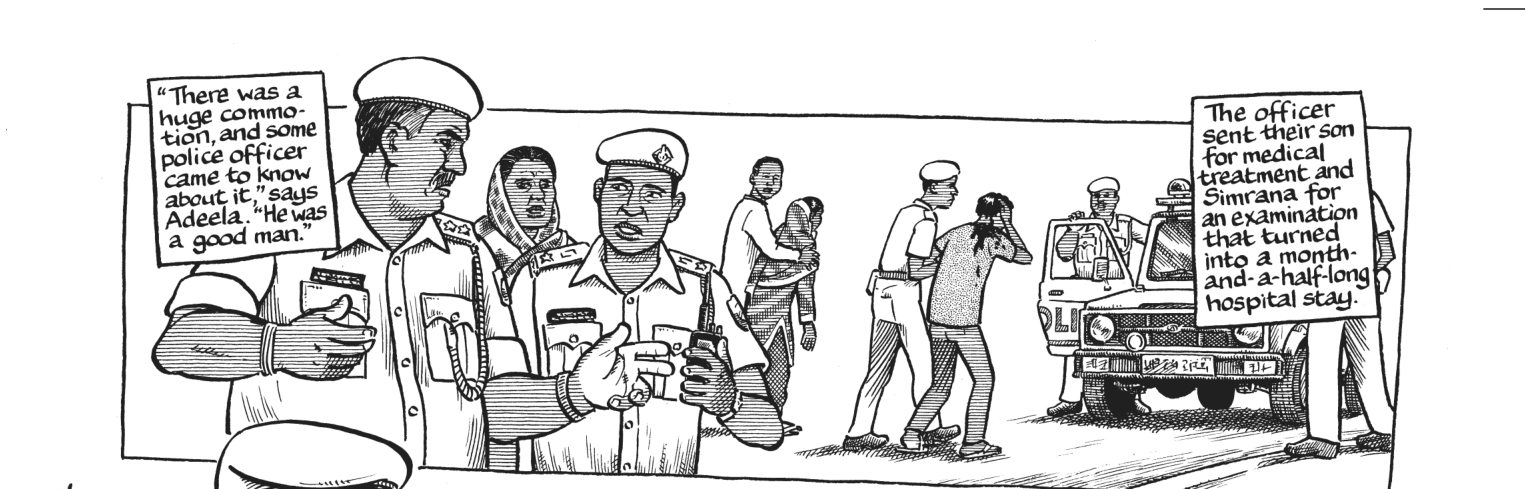
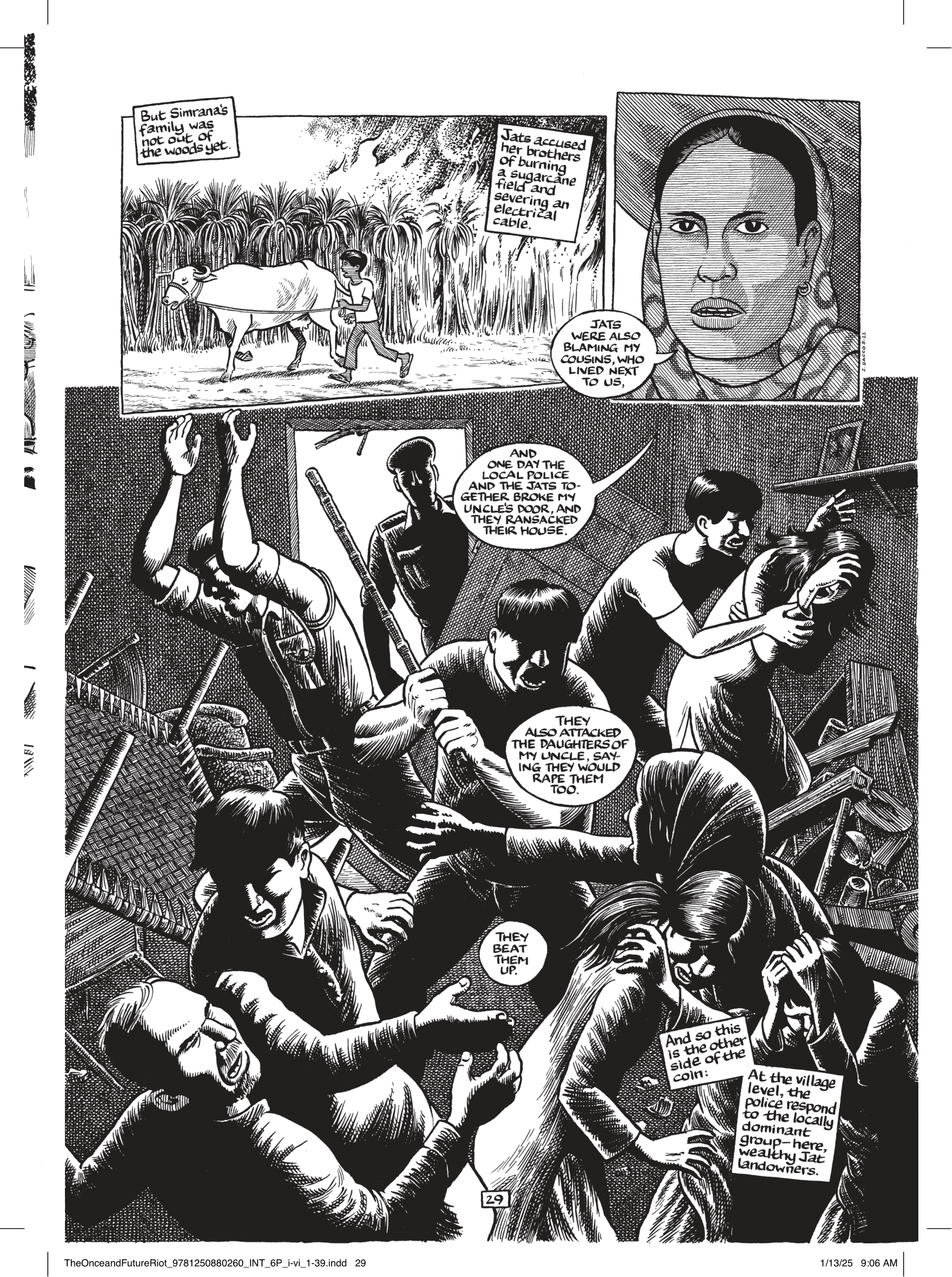
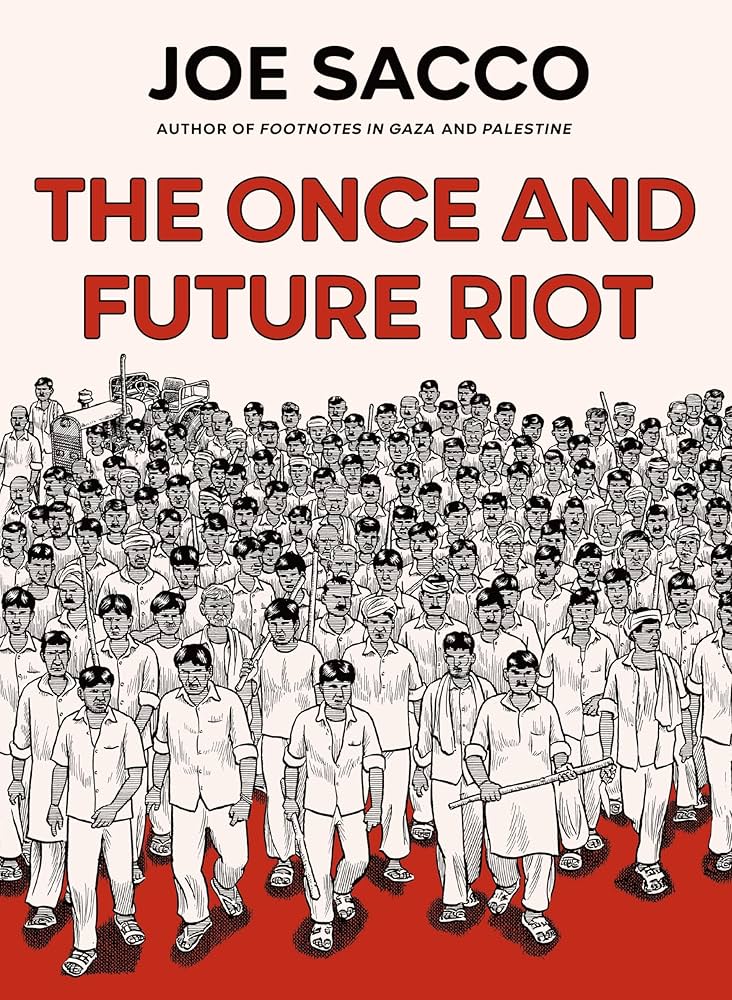
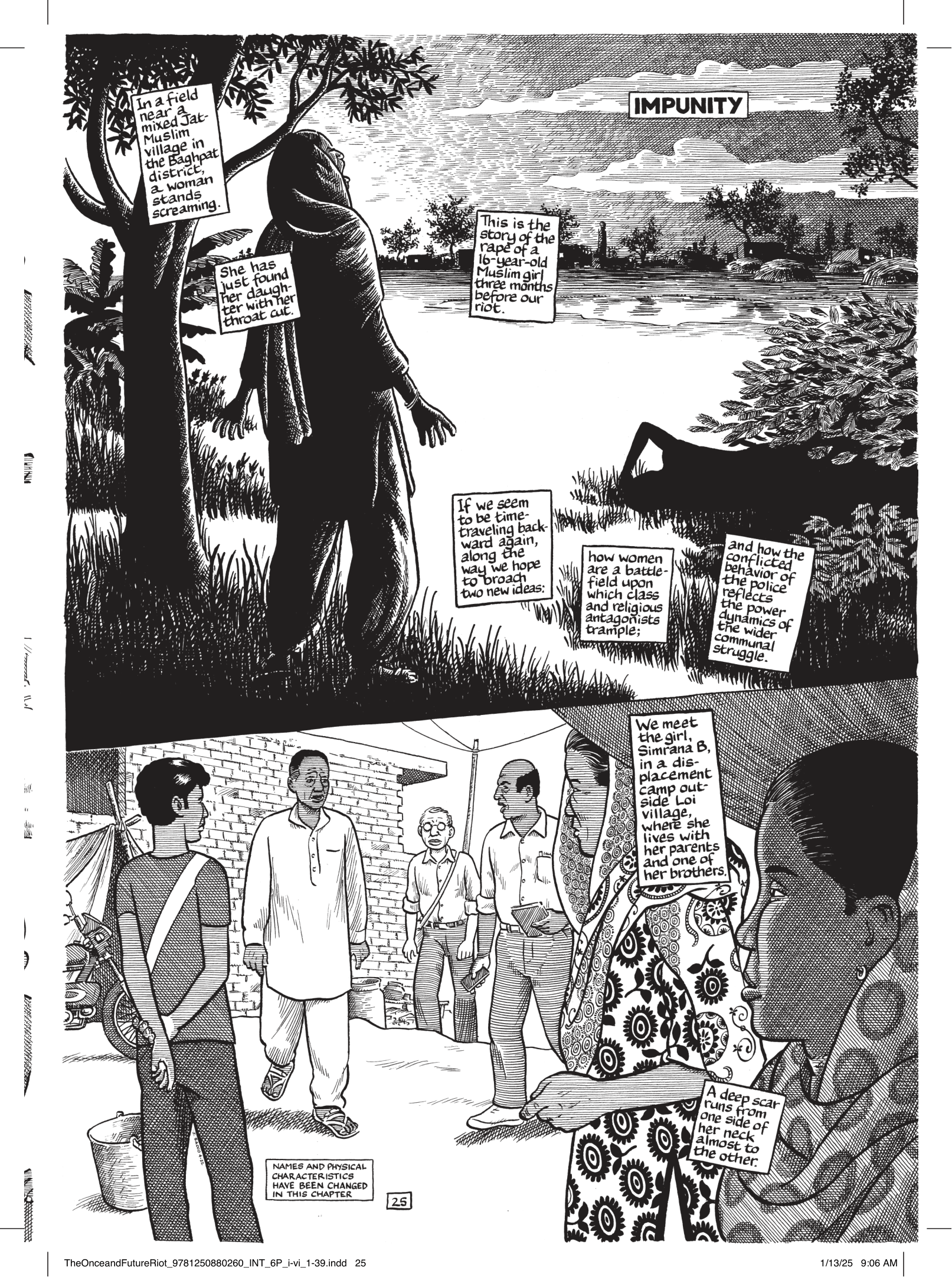
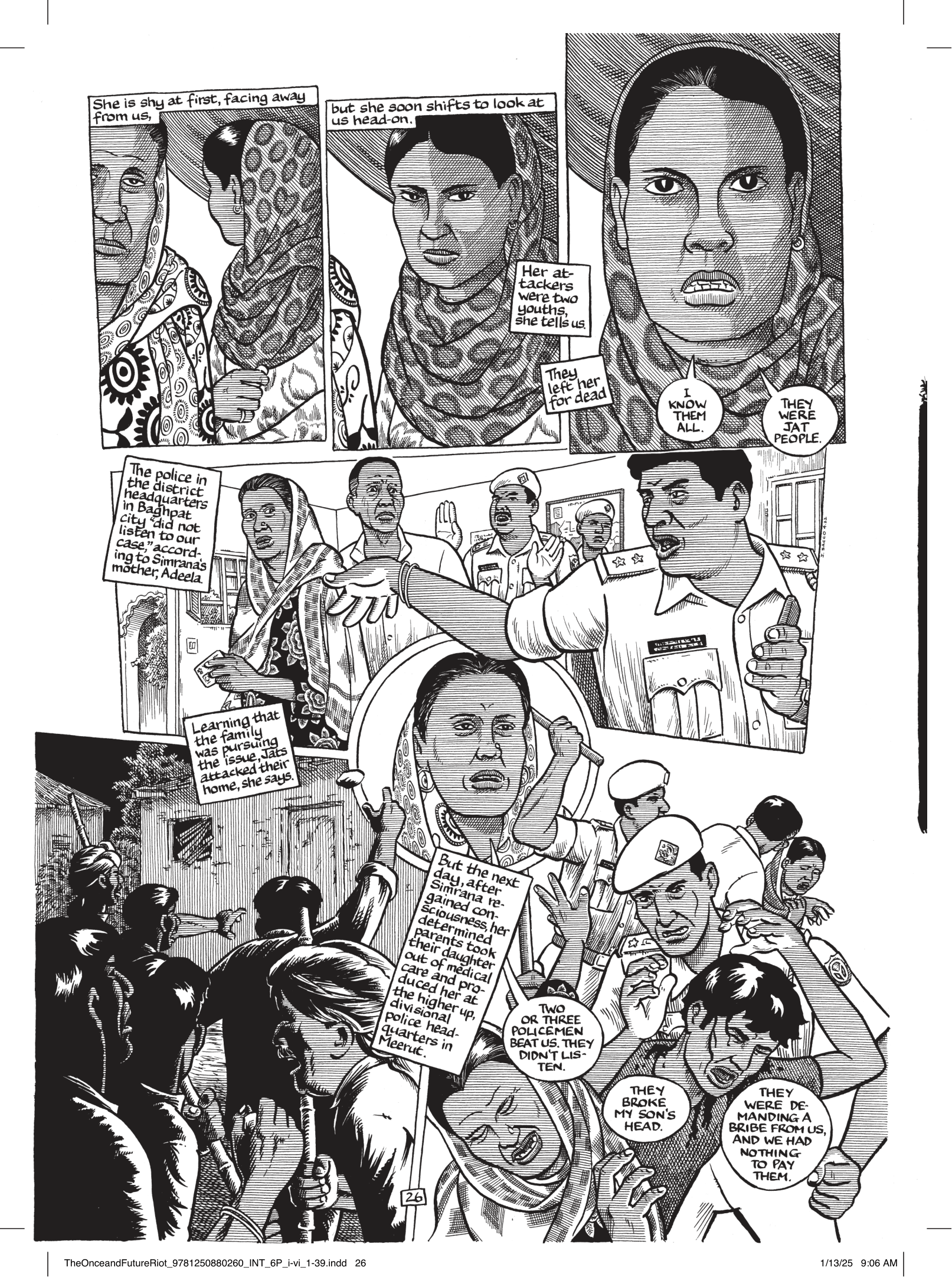
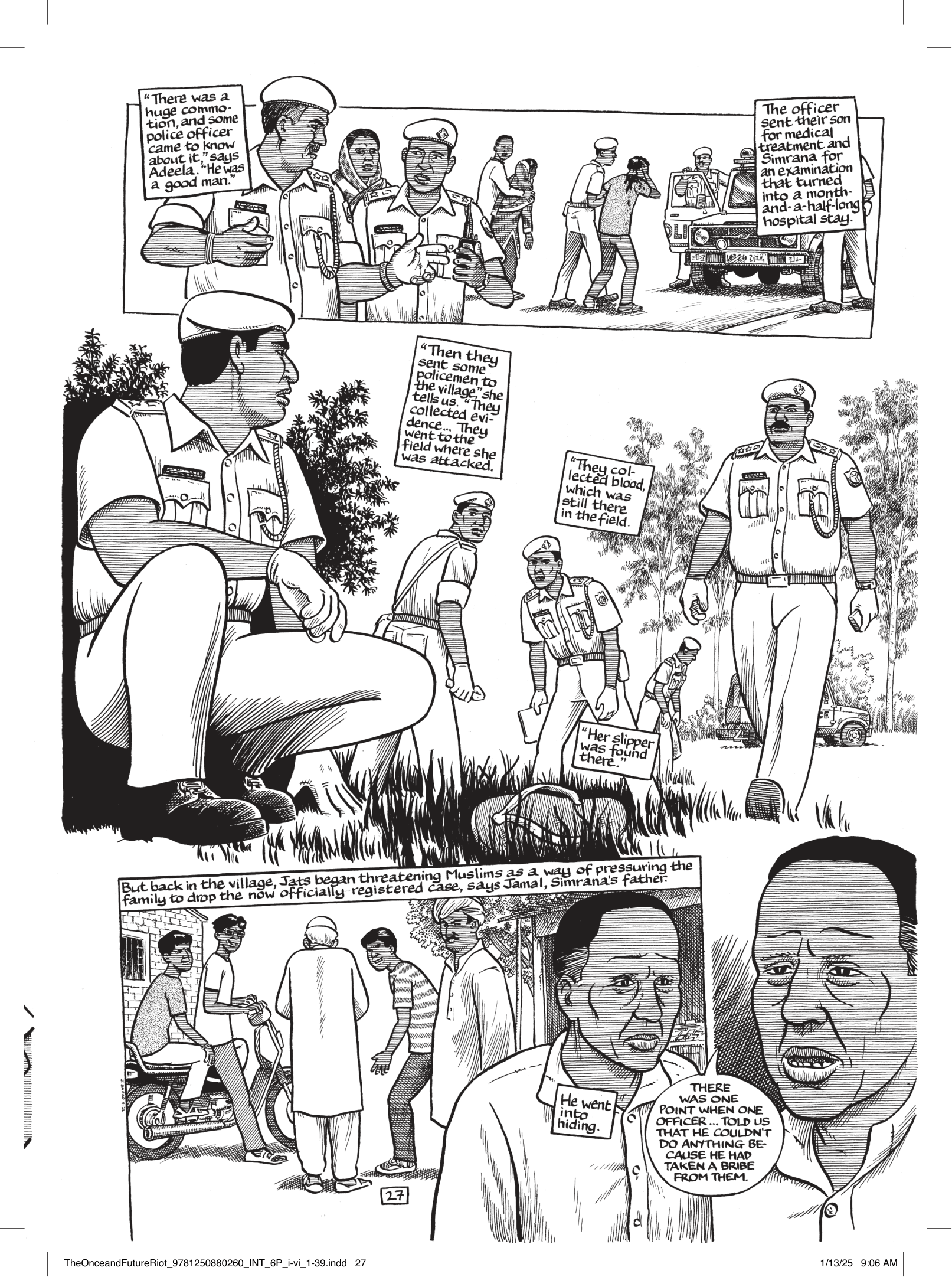
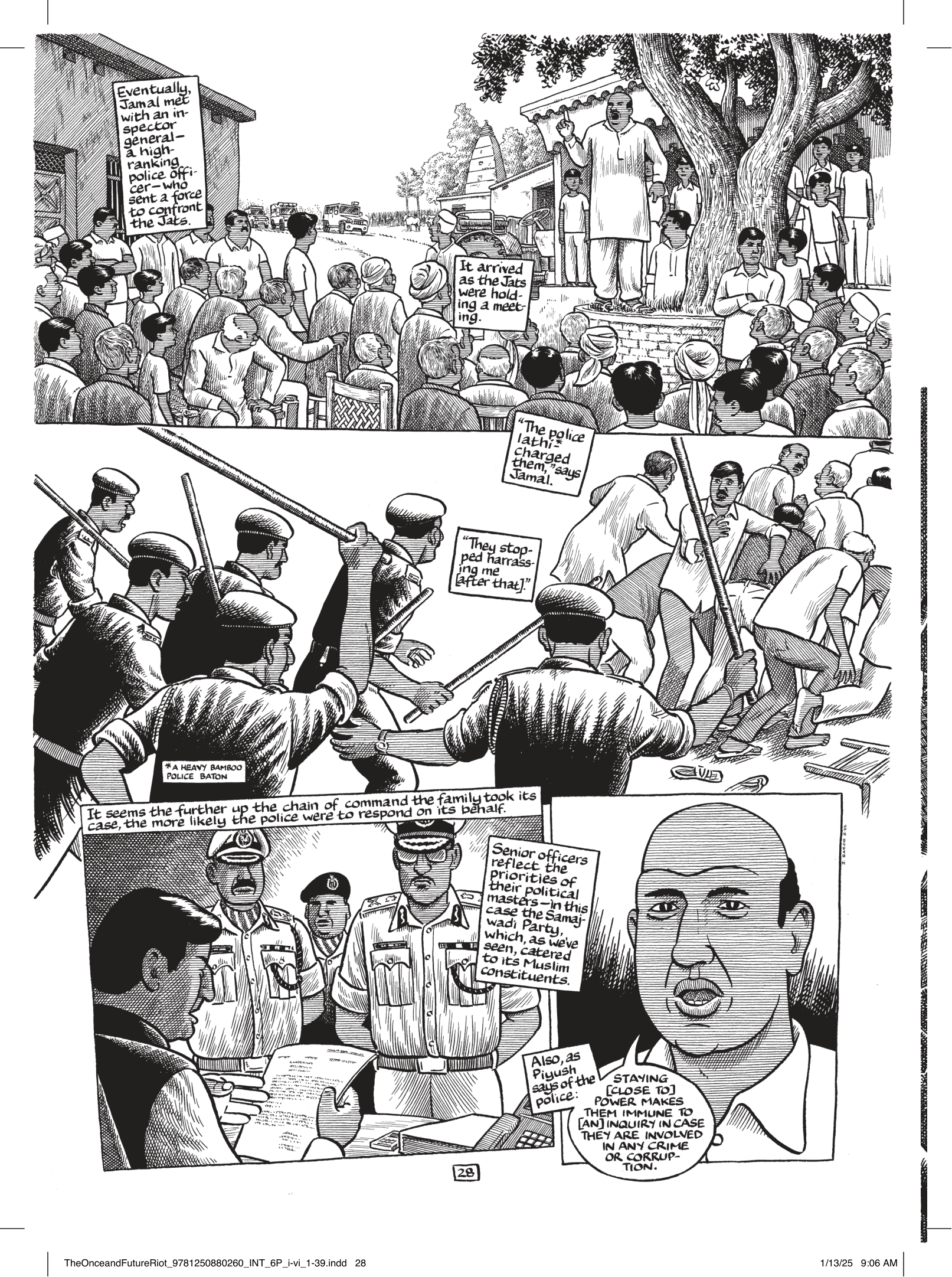
I don’t want to leave you without talking about your new book, The Once and Future Riot. It almost reads like an example of the Rashomon effect, with the Muslims and the Hindus seeing an event from two different points of view. Was that your intention in writing it?
I was curious to see what people would say about what happened during this period of rioting in Uttar Pradesh in 2013. I went there about a year afterward. I was interested in what narratives they would come up with. I don’t think I would’ve been so interested in the story if it was just a matter of reporting, like, well, this is what happened, and then this happened and this happened.
I’m trying to look for different approaches to the journalism I’m doing. I wasn’t setting out necessarily to have this Rashomon effect. I was just curious about what they were going to say. And it turns out to be, as you described it.
I found that both sides were tailoring their stories to suit themselves and obviously to protect themselves. But you have to go beyond just showing—or just demonstrating—that something is fishy. You actually have to prove it’s not correct. I would put those stories I was being told next to what factually happened. You have to do actual reporting, not just rely on, well, this side says this and this side says that and now I’m going to leave it alone.
That’s okay, but what actually happened? How close are these two sides to describing events as they actually took place? That was an intriguing idea for me.
You’re known for serious political cartooning, but you started your career doing more satirical work. You’ve said that you want to go back to that humorous work. Any slapstick coming from you in the future?
I’m working now on my Rolling Stones book, which has been in the works for more than a decade.
It was always my Saturday project. Every now and then I had to stop working on it when I had to get serious about finishing a piece of journalism. It’s really been necessary for me to work on something like this just for myself, because I’m kind of—I hate the expression—but burned out on journalism and burned out on how the world is.
Though, I’ve got to say, the Stones book is really about the world as it is, but coming through a completely different prism—the prism of satire, humor. There’s a lot of serious material in there, but it’s all refracted.
Can you tell me what it’s about, or is it under wraps until a publishing date?
It’s hard to describe. I would say it’s like a complete synthesis of Western thought and civilization in an easy-to-read comic book.
So nothing ambitious.
That’s it. It is kind of ambitious, but yeah.
Even though you are working on an ambitious humor book about the Rolling Stones, politics does keep pulling you back. You’re working on another collaboration with the journalist Chris Hedges, returning to Gaza. It’s coming out, I believe, in the fall. You both have a history in that region, and the genocide must be especially hard on you both. I’m curious: is that the genesis for the book—what’s currently going on in Israel?
Yeah. It’s called Requiem in Gaza. It’s finished now. We’re in the stage of choosing the cover, that kind of thing. I spent a lot of time in Gaza and spent a lot of years working on books about the Palestinians. And Chris was The New York Times bureau chief in the Middle East, and he knows the region well.
We actually did a magazine piece for Harper’s back in the early 2000s about a town in Khan Younis in Gaza. We both have a lot of history with the place. So yes, when the genocide started, we were both appalled. And I think it’s just a calling. You have to do something.
Even though I actually wanted my career to start going in a completely different direction, there was no way around it. I have friends there. I knew the streets. You cannot just ignore your family, let’s say.
We were both called to the story. We both knew we had to do it. I think in my particular case there was a part of me that didn’t want to do it just because I knew it was going to be very difficult, which it was. The story is really harrowing and hard.
It’s hard to draw that stuff. It’s hard to hear those stories. But they need to be told. And they’re told through the words of the Palestinians themselves. It’s absolutely necessary that there’s a record of this sort of thing. And this is just the beginning, I think, of the records of these things that will be coming out in the foreseeable future.
Thank you for all the good work you do, and I’m looking forward to a respite from that with the more humorous or lighter stuff.
You’re welcome, Peter. It was a pleasure.
Below: Excerpts from The Once and Future Riot by Joe Sacco. Published by Metropolitan Books. Copyright © 2025 by Joe Sacco. All rights reserved.
© 2026 Newsjunkie.net