
Who's behind the news?
Who's behind the news?
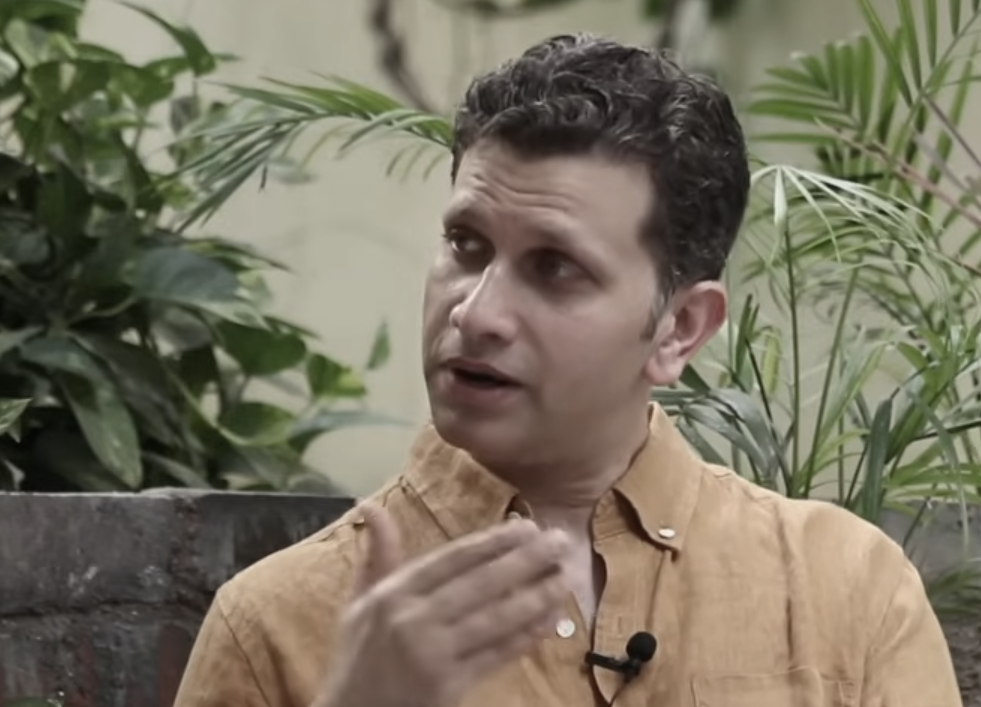
Kunal Purohit talks about his new report on the growth of H-Pop music on streaming platforms
Report published June 15, 2026 by Center for the Study of Organized Hate
Note: The CSOH report is a follow-up and expansion upon Kunal Purohit’s 2023 book H-Pop: The Secretive World of Hindutva Pop Stars (HarperCollins), a five-year investigation into how Hindutva-aligned singers, poets, and publishers use popular culture to normalize hate against Muslims and other minorities. Purohit’s journalism has been published widely—his work has appeared in Hindustan Times, Free Press Journal, Times of India, Foreign Policy, Al Jazeera, ProPublica, South China Morning Post, Deutsche Welle, The Wire, and Article 14. |
Let's start with the phenomenon of H-Pop. You've researched and written extensively on this topic for several years, culminating in your 2023 book, H-Pop: The Secretive World of Hindutva Pop Stars. How would you describe the scope, content, and evolution of H-Pop from then until now?
This is a genre of music that, in many ways, tries to capture the essence of Hindu nationalism and convert that ideology into songs with catchy hooks. The tunes are sometimes like EDM rave tracks and sometimes more devotional, but the purpose is the same: to package the ideology into bite-sized songs that are only three or four minutes long.
Hindu nationalism targets religious minorities, particularly Muslims and Christians. These songs portray those communities as existential threats and often carry an implicit—or explicit—call to violence. That violence is framed either as retribution for alleged past wrongs or as retaliation over contemporary disputes, whether they're over religious sites, interfaith marriages, or other flashpoints.
#
What this genre ultimately does is create songs that echo the ideology surrounding all of these issues. It's an appealing way for people to engage with it. Rather than listening to long political speeches, they can hear the same messages in songs that are easy to remember, share, and repeat.
You've published a report this month through the Center for the Study of Organized Hate in partnership with India Hate Lab. Tell us about the genesis of the project and what it covers.
One of the things we've struggled with since I began covering this phenomenon in 2018 is finding a way to measure its growth.
When I first started looking at H-Pop, I only found evidence of it in rural India, in smaller towns and villages. Now, eight years later, I hear the same songs on the streets of India's largest cities, including Mumbai, where I live. So it's broken geographic barriers.
It's also broken class barriers. These songs were once heard mainly during religious processions in rural areas. Today they're played in elite spaces, including events like the Cricket World Cup, where tickets are prohibitively expensive.
What we were missing was a way to quantify that growth, and that's what this report attempts to do.
We examined the role that four major technology platforms—YouTube, Instagram, Apple Music, and Spotify—have played in the growth of this genre.
Three of those platforms have explicit policies prohibiting hateful or discriminatory content based on religion, race, gender, or similar characteristics. Apple Music simply requires that content comply with local laws.
Despite those policies, we identified 523 H-Pop songs that violate the platforms' own standards.
YouTube hosted 210 of them. Spotify hosted 109. Apple Music had 101, and Instagram featured 103.
On YouTube alone, those songs accumulated nearly 200 million views. Instagram users created approximately six million reels using them.
Our findings suggest that Big Tech isn't simply providing a platform for this content. It's amplifying it. More disturbingly, we found evidence that these platforms are helping creators monetize these songs, effectively rewarding and funding the production of more hate-filled music.
Let's stay there for a moment. It's clear this isn't just a handful of songs slipping through the cracks. This is a wave. What's your sense of what's happening? Is it simply that the platforms lack language expertise or moderation capacity, or is something else going on?
Over the last few months we've repeatedly seen videos and posts—whether in English, Hindi, Marathi, or other Indian languages—taken down very quickly if they're critical of the Modi government or Hindu nationalist ideology.
People have posted videos about overcrowded trains. The government requested they be removed, and they were. Someone I know posted a video criticizing data centers for their environmental impact, and Instagram removed it after a government request.
There are countless examples like that.
So this isn't a question of capability.
It's selective enforcement.
These platforms have repeatedly demonstrated that when they want to remove content on behalf of the Indian government, they're perfectly capable of doing so, often within days.
When the platforms are alerted to this content, can they act? I'm sure they know about your report. What has their response been?
Officially, we haven't heard anything.
You made an important distinction between reacting to content that's reported and proactively identifying problematic content.
On YouTube alone we found 210 H-Pop songs that violated the platform's own standards. We also examined the channels uploading them and found that 40 percent of those songs came from just three YouTube channels.
All three channels had been monetized, meaning YouTube was sharing advertising revenue with them.
One of those channels even received YouTube's Silver Creator Award because of its growth. The creators proudly display that award in their studio and feature it on their YouTube page. It sends a message to viewers that YouTube considers their work worthy of recognition.
So this isn't simply a matter of platforms overlooking harmful content. They're actively rewarding some of these creators.
At best, Big Tech is allowing this music to flourish. At worst, it's patronizing, financing, and helping spread it.
Social media—and entertainment-driven platforms in particular—operate on a tight feedback loop between creators and audiences. What effect has that had on the evolution of H-Pop? Does it encourage creators to become more extreme?
I'll give you an example from my reporting for the book.
When I interviewed many of these H-Pop artists about how they got started, they often described a time when they weren't making hateful music. They experimented with more socially conscious or general-interest material.
One singer told me that her first successful song blamed Muslims for a terrorist attack in India in 2019, even though there was no evidence implicating an entire community.
That song went viral.
The songs she released afterward were far less politically inflammatory, but none came close to matching the popularity of the first one.
I think that tells us something important about the incentives creators face.
So the moderate material didn't succeed, but the hate-filled material did?
Absolutely.
Many creators told me that if they wanted a song to perform well, they needed references to Modi or to Muslims because those were the keywords that drove engagement online.
That's one part of the equation between creators and audiences.
The other part involves the platforms themselves. If their algorithms simply reward engagement, they naturally amplify content that provokes stronger emotional reactions.
But our report uncovers something beyond that. We also found a pattern in which content critical of the government is removed while hateful content remains online and continues to be amplified.
At that point, it's no longer a neutral platform. It's no longer an even playing field where everyone is equally free to express political views.
We're seeing platforms actively boosting one kind of content while suppressing another.
For our U.S. audience, is H-Pop part of a broader nationalist pop music movement, or is it a distinct genre?
H-Pop is the larger umbrella. Within it are several subgenres.
The most dominant targets religious minorities through dehumanization and calls to violence. Others celebrate Prime Minister Modi, portraying him as a strong, muscular leader. Another focuses on India's foreign policy and Modi's leadership on the world stage. Yet another presents India as an aggressive global power, particularly in relation to Pakistan, China, and Bangladesh.
Some of these songs certainly promote nationalism, but that's really a subgenre within H-Pop. Even songs that celebrate India or Modi often include derogatory references to Muslims. So while nationalism is part of the genre, H-Pop is much broader than simply patriotic music.
You mentioned Pakistan and Bangladesh. Is there a corresponding anti-Hindu pop music movement in those countries?
I'm not sure. I haven't reported extensively in those countries.
Within India, though, there are some Muslim creators producing songs that celebrate Islam and, in some cases, use aggressive rhetoric toward non-Muslims. The playbook is similar. These songs appear on YouTube, but instead of referring specifically to Hindus, they tend to speak more generally about non-Islamic people or perceived rivals of Islam.
It's a space worth watching, although I don't believe it's anywhere near the scale of H-Pop.
We've also seen recent Bollywood blockbusters that portray India's Muslim past in an overtly negative light, reinforcing the idea that some Indians are more authentically Indian than others. What role does film music play in all of this? Film has always been one of India's biggest vehicles for popular music.
Having closely followed the Hindu right on platforms like Instagram, I think there's an increasing understanding within the Hindi film industry—and among composers—that certain soundtracks can become the background music for social media content.
Much of the Hindu right's online content has a militaristic tone. You might see videos of activists confronting Muslim shopkeepers, demanding they display Muslim names on their storefronts so Hindus know where they're shopping. Or videos of vigilantes stopping trucks transporting cattle and assaulting Muslim drivers.
These short videos are edited almost like miniature action films.
Music is central to creating that atmosphere. The soundtrack becomes an emotional cue, making these one-minute videos feel cinematic.
Increasingly, we've also seen mainstream Hindi films promote narratives suggesting Hindu supremacy or portraying other religious communities negatively. Songs from those films are then repurposed for reels and short-form videos, extending their reach well beyond the films themselves.
I don't yet have hard evidence establishing a direct relationship, but there certainly appears to be a growing effort within the film industry to create music that lends itself to this kind of online content.
What's next for this report—and for your work?
Before we finish, I'd like to emphasize one important finding.
India is experiencing a surge in aggressive Hindu nationalism, and that has made life increasingly difficult for roughly 200 million Muslims, as well as Christians and other minority communities.
What this report demonstrates is that not all of that growth has been organic.
Some of the wealthiest corporations in the world, headquartered in the United States, are helping amplify this moment because India represents one of their largest and most profitable markets.
YouTube alone has more than 500 million users in India—more people than the entire population of the United States.
It's deeply troubling that some of the world's richest technology companies are responding to that opportunity by amplifying, promoting, and, in some cases, helping finance content that places religious minorities at greater risk.
If these companies simply enforced the standards they already claim to uphold, they could prevent some of this harm.
At the beginning of our conversation, I talked about how H-Pop had crossed geographic and class barriers. This report identifies another reason why: Big Tech has played a significant role in taking songs that once circulated in small villages and helping them reach audiences across the country. Music that might once have been heard only in rural Jharkhand is now playing outside Mumbai's international airport.
That's why I believe these platforms must be held accountable.
How do we begin doing that?
Reports like this are one place to start.
We need more evidence-based journalism that documents where platforms are violating their own policies. We need stronger, data-driven advocacy and more mechanisms for holding Big Tech accountable.
From where I sit in India—from the Global South—it's encouraging to see that people like Mark Zuckerberg and other technology executives are called before congressional committees in the United States or questioned by lawmakers in Europe.
In India, these companies often don't feel accountable in the same way. Our government isn't especially interested in challenging them because, in many cases, it benefits from this kind of content.
That means civil society has to play a larger role.
We need independent organizations, journalists, and researchers to keep documenting what's happening and demanding accountability.
Whether that's enough, I honestly don't know. At the moment, it's more of a hope than a certainty.
We haven't talked about the report itself. It's an extensive piece of research, and congratulations on putting together such comprehensive documentation. What do you hope happens next?
We've been presenting the findings to people who are interested in the subject, and I hope it sparks a broader conversation.
I also hope the report becomes a foundation for future academic research.
When I began working on my book, these songs were enormously popular on the ground, but very little scholarly research existed. My hope is that both the book and reports like this become starting points for much deeper academic engagement.
We're also hopeful that Big Tech will eventually engage with researchers like us.
One point I'd like to emphasize is that after identifying all 523 songs, we didn't simply assume the platforms knew about them. We manually reported every one.
Then we waited. Not for a few days. Not for a few weeks. We gave the platforms six months to review the reports.
At the end of those six months, only 8 percent of the songs had been removed.
Newsjunkie interview, June 24, 2026
Kunal Purohit’s post on X showing big tech platforms encouraging Hindutva Pop music
Center for the Study of Organized Hate
© 2026 Newsjunkie.net